AI, ML and Statistical Learning
Machine learning, statistical learning, interpretable models, large language models, and advanced analytics.
University of the Witwatersrand - Johannesburg
A continental platform for advancing data science, artificial intelligence, responsible innovation, and African-centred digital transformation.
Conference Positioning
ADSC 2026 brings together researchers, postgraduate students, academics, data scientists, industry practitioners, policymakers, innovators, institutional leaders, development partners, and sponsors working across data science, AI, machine learning, statistics, analytics, and digital transformation.
The conference connects scholarly excellence with practical relevance: research exchange, postgraduate development, responsible AI dialogue, industry engagement, policy discussion, exhibitions, and durable cross-sector collaboration.
Themes
Machine learning, statistical learning, interpretable models, large language models, and advanced analytics.
Ethics, accountability, fairness, transparency, data governance, policy, and institutional readiness.
Health, finance, climate, energy, education, geospatial analytics, business, sustainability, and public services.
Postgraduate development, curriculum innovation, research infrastructure, open data, and data science pedagogy.
Programme
Pre-conference
Workshops
A full day of optional workshops before the main conference opens—deep dives across applied methods, practice, and emerging themes. Join delegates who want to learn intensively and arrive ready for the plenary programme.
Day one
Registration / Breakfast Tea
Master of Ceremony – opening
Keynote · Prof Loyiso Nongxa
Session 1 · All tracks
Tea
Session 2 · All tracks
Lunch
Keynote · Prof Maurice Radebe
Panel · AI Governance
Tea and Posters
Evening open
Day two
Breakfast Tea
Master of Ceremony – Intro
Keynote · Prof Vukosi Marivate
Session 3 · All tracks
Tea
Session 4 · All tracks
Lunch
Keynote · Prof Karin-Therese Howell
Panel · Data Science Education
Tea and Tech exhibitions
Gala Dinner · Venue (TBA)
Day three
Breakfast Tea
Master of Ceremony – Intro
Keynote · Prof Inger Fabris-Rotelli
Session 5 · All tracks
Tea
Panel · Advances in Data Science
Lunch
Prize giving
Closing plenary & conference close · Prof Benjamin Rosman
Digital Dome / Planetarium
Evening open
Pre-Conference Workshops
Building Trustworthy Data Science with LLM Agents.
Naweed Khan and Dr Ndivhuwo Makondo, IBM ResearchApplied foundations for spatial statistics, GIS, remote sensing, and geospatial analytics.
Prof. Inger Fabris-Rotelli, University of PretoriaResearch quality, positioning, writing, and publication strategy.
Prof. Moinak Maiti, Wits UniversityProfessional practice, implementation patterns, and applied organisational data science.
Prof. Charis Harley, University of JohannesburgCurrent registration information also references workshop coverage in healthcare AI, quantum machine learning and data science, trustworthy LLM agents, spatial data science, publishing, and data science in industry. Workshop fee: R1,500 per workshop.
Speakers
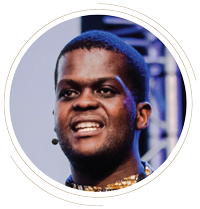
Professor Vukosi Marivate is a Professor of Computer Science at the University of Pretoria, Director of the African Institute for Data Science and Artificial Intelligence (AfriDSAI), and holder of the ABSA UP Chair of Data Science. He also serves on the United Nations Independent International Scientific Panel on Artificial Intelligence. His work focuses on machine learning, artificial intelligence, and natural language processing, with a strong emphasis on local and low-resource African languages. He leads the Data Science for Social Impact research group and has worked on projects in science, energy, public safety, and utilities. He is also a co-founder of Lelapa AI, the Masakhane Research Foundation, and the Deep Learning Indaba.
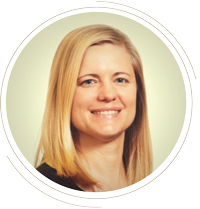
Professor Inger Fabris-Rotelli is a Professor in the Department of Statistics at the University of Pretoria. She is the immediate past President of the South African Statistical Association (SASA), co-chair of the SASA Data Science Group, and is active in the broader mathematical sciences and data science community, including NITheCS-related activities. She has made significant contributions to postgraduate supervision and research development in statistics and data science, and has supervised many honours, master's, and doctoral students. Her research interests include spatial statistics, GIS, remote sensing, image processing, spatial epidemiology, and criminology. She is an NRF-rated researcher and has served in several professional leadership roles nationally and internationally.
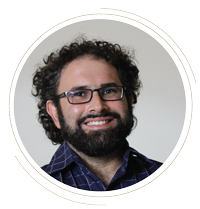
Professor Benjamin Rosman is a Professor in the School of Computer Science and Applied Mathematics at the University of the Witwatersrand, founding Director of the Machine Intelligence and Neural Discovery (MIND) Institute, and head of the Robotics, Autonomous Intelligence and Learning (RAIL) Laboratory. He was also named in TIME magazine's TIME100 AI 2025 list, in the Thinkers category, in recognition of his contribution to artificial intelligence and the growth of Africa's AI ecosystem.
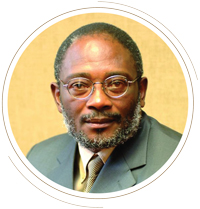
Professor Loyiso Nongxa is an eminent South African mathematician, Professor Emeritus at the University of the Witwatersrand, Honorary Professor at the University of Pretoria, and Extraordinary Professor at the University of the Western Cape. He served as Deputy Vice-Chancellor for Research at Wits and later as Vice-Chancellor and Principal of the University from 2003 to 2013. A Rhodes Scholar, he obtained his doctorate in Mathematics from the University of Oxford in 1982, after completing his earlier studies at the University of Fort Hare. His academic work has included group theory, while his more recent scholarly interests include the mathematical foundations of data science and machine learning. He has also served as Chairperson of the National Research Foundation and as one of the Vice-Presidents of the International Mathematical Union.
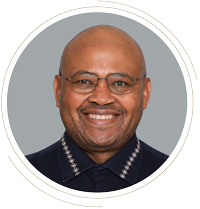
Professor Maurice Radebe is Faculty Director in Commerce, Law and Management at the University of the Witwatersrand and an Adjunct Professor at Wits Business School. He previously served as Head and Director of Wits Business School and as Executive Vice President responsible for Sasol's global Energy Business. His executive career spans more than three decades in the energy sector, including senior leadership roles at Shell, Exel, and Sasol, with extensive experience in strategy, operations, market development, restructuring, and major energy projects across Africa and internationally. He is also the Founder and Chairman of the Unleashing Leadership Potential Foundation in South Africa. Since joining Wits Business School as an Executive in Residence in 2013, he has contributed significantly to bringing real-world business and energy-sector leadership experience into the academic environment.
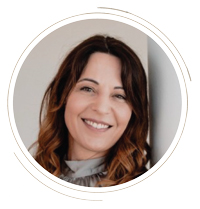
Professor Karin-Therese Howell is the Executive Director of AIMS South Africa and holds the academic rank of Associate Professor in Mathematics at Stellenbosch University. She holds a PhD in Mathematics from the University of the Free State and has published in international peer-reviewed journals. Her research focuses on abstract algebra, particularly near-vector spaces, and extends into algebraic biology, where biological problems are studied through algebraic structures and methods. She is also deeply committed to mathematics education, having received multiple Vice-Rector's Awards for Excellence in First-Year Teaching at Stellenbosch University. Her broader academic leadership includes advancing mathematics in Africa, supporting women in mathematics, and promoting greater inclusivity in the mathematical sciences.
Prof. Ian Jandrell, Deputy Vice-Chancellor: Systems and Operations at Wits University.
Prof. Lynn Morris, Deputy Vice-Chancellor: Research and Innovation at Wits University.
Registration
Extended deadline: 15 May 2026. Student proof may be required.
Extended deadline: 15 May 2026. Gala dinner excluded.
Standard registration deadline: 5 June 2026.
Standard registration deadline: 5 June 2026.
Includes gala dinner, priority seating, networking access, and related benefits.
Gala dinner: R1,200. Workshops: R1,500 each. Additional paper fee: R1,000.
Proceedings and Publications
Accepted abstracts may be presented at the conference. Proceedings inclusion is subject to full paper submission, review, formatting compliance, editorial checks, and Scientific Committee approval.
Selected high-quality full papers may be invited for consideration in the edited volume Statistics/ML/AI in Action for Sustainable Development, expected by Springer in mid-2027 as part of the ICSA Book Series in Statistics.
Sponsorship
Website logo, programme acknowledgement, opening recognition, one full registration.
Bronze benefits, two full registrations, exhibition space, selected communication recognition.
Silver benefits, premium logo placement, bag insert, and themed session, panel, or student activity sponsorship.
Gold benefits, four registrations, premium branding, brief speaking opportunity, and priority exhibition presence.
Official bag branding, exhibition presence, inserts, programme acknowledgement, and two registrations.
Sponsorship of up to three workshops, workshop programme acknowledgement, branding, and two registrations.
Sponsors and Partners







Governance
Dr Farai Mlambo, University of the Witwatersrand
Chaired by Prof. Inger Fabris-Rotelli, University of Pretoria. Safeguards academic integrity, peer review, and scholarly direction.
Chaired by Dr Taariq Surtee, University of the Witwatersrand. Coordinates operations, logistics, venue, scheduling, and communication.
Develops plenaries, technical sessions, panels, workshops, and academic activities under Scientific Committee oversight.
Oversee editorial quality, formatting compliance, publication readiness, and scholarly coherence.
Chaired by Dr Isaac Nyambiya, Great Zimbabwe University. Supports sponsorship, partnerships, and resource mobilisation.
Prof. Kanshukan Rajaratnam, Prof. Paida Mhangara, Prof. Thokozani Majozi, Prof. Costa Hofisi, and Prof. Charis Harley.
Future Editions
The governance framework, committee roles, programme architecture, sponsorship materials, and post-conference records can be preserved as a template for future ADSC editions.
The site structure is designed to grow with new host institutions, themes, speakers, sponsors, publication pathways, accommodation lists, and regional priorities.
Venue and Accommodation
Wits Science Stadium, University of the Witwatersrand, 1 Jan Smuts Avenue, Braamfontein, Johannesburg, South Africa.
Visit Wits UniversityHoliday Inn Johannesburg Sunnyside Park Hotel, Cnr Princess of Wales Terrace and Carse O'Gowrie, Parktown.
Tel: +27 (0) 87 630 0446
Hotel website Discounted ADS2026 booking linkFAQ
ADSC 2026 is organised under a formal governance framework hosted by the University of the Witwatersrand, with advisors, scientific, programme, proceedings, organising, and fundraising structures.
Yes. ADSC 2026 welcomes presenters and non-presenting delegates from academia, industry, government, development organisations, and civil society.
Travel and accommodation funding is not automatically provided. Sponsorship support may be considered if funding becomes available, with priority potentially given to postgraduate students, early-career researchers, and under-resourced institutions.
No. Workshops are optional extras and cost R1,500 per workshop. Delegates should select workshop options during registration.
Yes. The gala dinner is an optional extra at R1,200. Corporate or industry delegate registration includes the gala dinner.
Yes. ADSC 2026 includes industry lightning talks, applied sessions, exhibitions, and professional practice content across AI, analytics, data science, and digital innovation.
ADSC 2026 intends to publish proceedings for eligible full papers, subject to peer review, formatting compliance, editorial checks, and Scientific Committee approval.
Yes. Sponsorship packages and tailored partnerships are available for universities, research institutes, government departments, industry partners, professional bodies, technology organisations, foundations, and development agencies.
Updates will be shared through the official conference website, registration portal, LinkedIn page, and official conference communication channels.
Resources